
A digital marketing agency is a company that provides online marketing services to businesses. These services include SEO, social media management, content writing, paid advertising (Google/Facebook Ads), web design, email marketing, and more.
Agencies help businesses grow their online visibility, generate leads, and increase revenue through strategic digital campaigns.
If you want to understand the basics of digital marketing first, read our detailed guide: What Do You Know About Digital Marketing?
Why Start a Digital Marketing Agency in 2026?
Before diving into the steps, here’s why 2025 is the right time:
- Over 5.4 billion people use the internet globally
- Businesses are spending more than ever on digital ads and SEO
- Remote work culture means you can work with clients worldwide
- Low startup cost compared to traditional businesses
- High income potential — agencies earn $2,000 to $20,000+ per client per month
Step 1: Choose Your Niche
The biggest mistake new agency owners make is trying to serve everyone. Instead, pick a specific niche and become the expert in it.
 Popular niches for digital marketing agencies:
- Local businesses (restaurants, salons, clinics)
- E-commerce stores
- Real estate companies
- Law firms and medical practices
- SaaS and tech startups
Choosing a niche helps you build a focused portfolio, charge premium prices, and stand out from competitors.
Step 2: Learn the Core Skills
You don’t need to be an expert in everything. But you should have a strong understanding of the most important digital marketing skills:
- SEO (Search Engine Optimization) — Helping websites rank on Google. Learn more in our guide: What is SEO in Digital Marketing?
- Content Marketing — Creating valuable content that attracts and converts customers
- Social Media Marketing — Building brand presence on Instagram, Facebook, LinkedIn, and TikTok
- Pay-Per-Click Advertising (PPC) — Running paid ads on Google and Meta
- Web Design Basics — Understanding how websites work and what makes them convert
- Analytics — Reading data from Google Analytics and other tools to make smart decisions
You don’t have to master all of these yourself. You can hire specialists or work with freelancers as your agency grows.
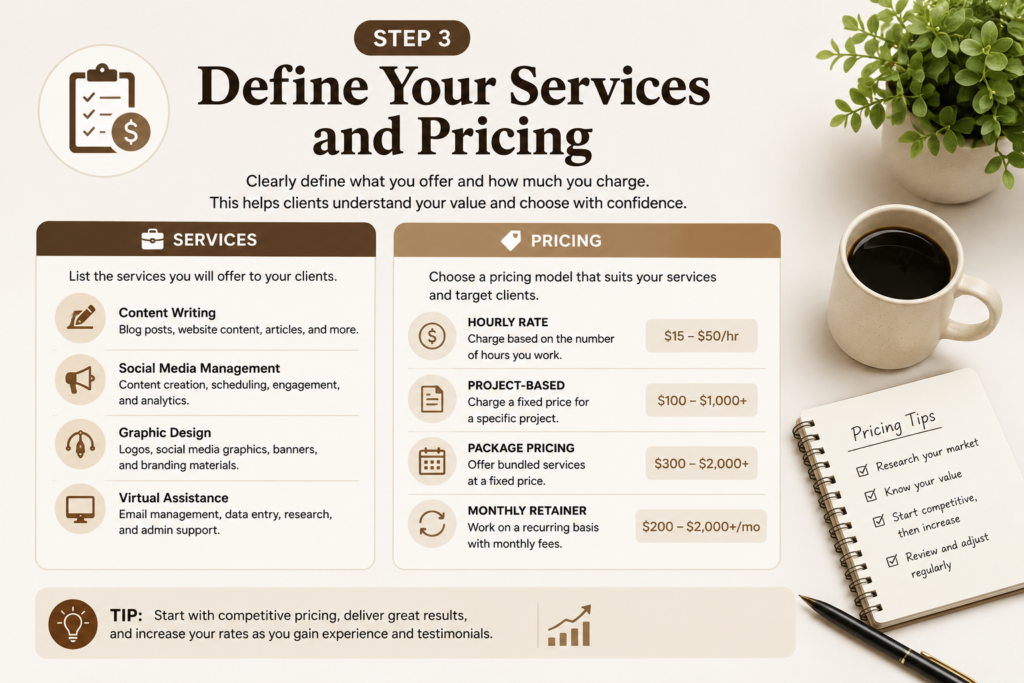
Step 3: Define Your Services and Pricing
Start with 2–3 core services instead of offering everything at once. This keeps your operations manageable and your messaging clear.
Example service packages for a new agency:
Starter Package — $500/month
- Basic SEO optimization
- 8 social media posts
- Monthly performance report
Growth Package — $1,200/month
- Advanced SEO + keyword research
- 20 social media posts + graphics
- 1 blog post per week
- Google Ads management
Set your prices based on your experience level, your niche, and the results you deliver.
Step 4: Register Your Business and Build Your Brand
To be taken seriously, you need a professional brand. This includes:
- Business name — Choose something memorable and relevant
- Logo and brand colors — Invest in a professional design
- Website — Your agency’s website is your most important marketing tool. It must be fast, mobile-friendly, and SEO-optimized
- Business registration — Register your agency legally in your country/region
- Professional email — Use a branded email like yourname@youragency.com
Your website should clearly explain who you are, what you do, who you help, and how to contact you. It should also include case studies and testimonials as you grow.
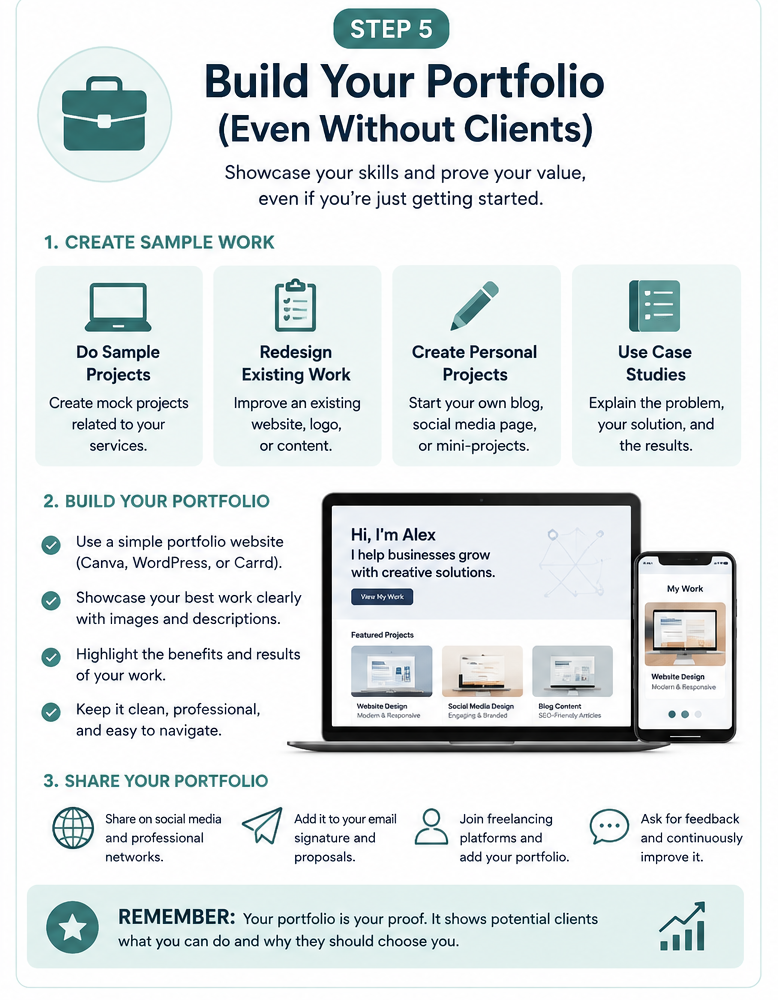
Step 5: Build Your Portfolio (Even Without Clients)
One of the hardest parts of starting an agency is the chicken-and-egg problem — clients want experience, but you need clients to get experience.
Here’s how to build your portfolio from scratch:
- Work for free or at a discount for 1–2 local businesses in exchange for a testimonial
- Create case studies showing the work you did and the results achieved
- Work on your own website — your agency’s site itself is a live portfolio
- Take on freelance projects before formally launching your agency
Even one or two strong case studies can help you land paying clients.
Step 6: Find Your First Clients
Getting your first paying client is a milestone. Here’s how to find them:
Warm outreach:
- Tell friends, family, and your network that you’ve launched an agency
- Offer a free audit or consultation to local businesses
Online platforms:
- List your services on Upwork, Fiverr, or PeoplePerHour
- Create a LinkedIn profile and start connecting with business owners
Content marketing:
- Write blog posts (like this one!) targeting your ideal clients
- Share helpful tips on social media to attract inbound leads
Guest posting:
- Publish articles on authority websites to build credibility and backlinks
- Cold outreach:
- Email or message businesses in your niche with a personalized pitch showing how you can help them
Step 7: Deliver Results and Ask for Referrals
Once you land your first client, focus 100% on delivering exceptional results. Happy clients:
- Stay longer (higher lifetime value)
- Refer other businesses to you
- Leave reviews and testimonials
A referral-based business is the most stable foundation for an agency. Always ask satisfied clients to recommend you
Step 8: Scale Your Agency
Once you have consistent clients and income, it’s time to scale:
- Hire freelancers — Start with a content writer, graphic designer, or SEO specialist
- Create systems — Use tools like Trello, Asana, or ClickUp to manage projects
- Automate reporting — Use tools like Google Data Studio or AgencyAnalytic
- Many successful agency owners started as solo freelancers. Read more about that path in our guide: What Is a Freelancer Digital Marketing Specialist?
How SiteNova Agency Can Help You
At SiteNova Agency, we specialize in helping businesses build a powerful digital presence through expert SEO, content writing, web design, and guest posting services.
Whether you’re a new agency looking to outsource services or a business ready to dominate your market online — we’re here to help.
Contact SiteNova Agency Today and let’s build your digital success together.